Saturday, May 7, 2016

The Defect by Jeff Bailey is Based on True Events


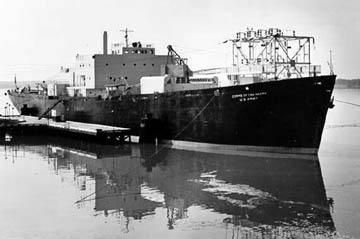
MH-1A, Gatun Lake

I have a lot of fun with my story lines. I base all of my stories on real events in the history of nuclear technologies. The Defect is based on real events at Watts Bar NPS and Three Mile Island NPS. At WattsBar, a gunman, wearing a hooded coat, fired several shots at a security guard. He missed the guard but managed to hit the guard’s truck. News articles says that the gunman escaped in a boat. When I worked at the MH-1A Army NPS on Lake Gatun in the Panama Canal Zone, we had tell local fishermen that they weren’t allowed to fish inside the marked area on several occasions.
Three Mile Island, NPS
At Three Mile Island, the reactor eventually melted down from a loss of reactor coolant. Two things contributed to the loss of coolant: a defect air solenoid valve and operator error. Compare the news release in The Defect with the Wikipedia page.
These things can and do happen. Because I was in the industry for so long, I know that they happen more frequently than the average person realizes. That’s what makes these stories interesting for me. I wrote several of the operating and power plant scenes in The Defect from my own experiences as an operator, especially in the control room. I don’t have documentation to support the stories, so all I can do is claim that they are fiction.
In my current project, I’m a Marine, the story takes place at the weapons maintenance at Fort Sill, OK. As a nuclear weapons maintenance technician, I was stationed at the maintenance facility at Ft. Sill. I went in and out of the Ft. Sill back gate on many occasions. My friends and I spent many days of relaxed recreation on Lake Lawtonka. The main character, I’m a Marine is a personification of my oldest granddaughter, Corporal Kalli Bailey, who is a Marine Corp. Aviation Firefighter.
Lake Lawtonka
Cassie.
The Chilcoat Project is based on an actual theft of nuclear weapons secrets (obsolete and inconsequential secrets) from a national research facility in New Mexico by a Chinese exchange researcher using the onsite email system. I also used my seventeen years as a researcher scientist at a national laboratory as story fodder in the laboratory descriptions and scenes.
Wine Country takes place in Pacific Northwest Wine Country. I live in the middle of that wine country. The Hanford Nuclear Reservation and the Pacific Northwest National Laboratory are two of largest employers in the area. My second granddaughter, who is a medical technician, was the inspiration for the character, Abby. Yes, we avid NCIS fans. The story is based on a real news account of ‘The Radioactive Boyscout’ who lived in Michigan. He accumulated so much radioactive material from legal, but minuscule, sources that the government had to condemn his family’s home and make it a Super Fund clean-up site. Blend the stories together, move them to the Pacific Northwest, add a measure of fiction and I have, what I feel, is good story.


Monday, May 2, 2016

A Jacket Synopsis for The Defect by Jeff Bailey

My editor and I have agreed on a story synopsis for the inside flap of the book jacket for The Defect. I especially like the blend of intriguing information and open questions. I would buy this book and read it.

"Terrorists have infiltrated the staff of the Desert Canyons nuclear power station. They want to melt it down and spread radioactive waste all over Southern California. Think it can't happen today? Think again. At two in the morning in 2013, an unknown hooded person infiltrated a nuclear power plant in Tennessee. Shots were fired. It never made national news. None of what you read here ever happened, the cover-up was too complete. This story is based on actual events."

 The synopsis is a nice blend with the cover art.

Saturday, April 16, 2016

A Review of Steve Sheinkin's BOMB by Jeff Bailey


Today, I’m reviewing BOMB, The Race to Build - and Steal – the World’s Most Dangerous Weapon by Steve Sheinkin. BOMB is a historical novel about the people and events surrounding the United States’ quest to build the world’s first nuclear weapon. The book is history, painstakingly accurate and extensively cited history. However, Steve presents the history in the form of the stories of the people who lived that history. I was taken by the depth and breadth of the bibliography. I was most impressed with the volume of recently declassified documents that Steve cited for his stories. There would have been a hole in this story if he had not included these declassified documents. Steve also introduced his characters out the personal papers and memoirs of those characters. I was able to understand (but not necessarily agree with) the thinking and motivations that drove these people.
Before I retired, I spent fifty years working in various nuclear industries from nuclear weapons to nuclear power plants to nuclear research reactors to nuclear research at a national laboratory and I learned things from this book, excellent. Before, it was all just history. Now, it’s alive with the real people. For me, the history is deeper when I know the whole story of the people who lived the history. And, for me, the people are more personable when I match them to the history that they lived. Not since James Michener have I enjoyed a historic novel more. My only comment is that I would have preferred that it be one thousand pages.
I met Steve Sheinkin a few weeks ago, at the 2016 Cavalcade of Authors in Washington State. The Cavalcade is a Pacific Northwest regional event similar to The International Science and Engineering Fair. The difference is that The Cavalcade brought 1200 middle school and high school readers and aspiring authors together with more than twenty of their favorite authors for a day of lectures, workshops, signing events and photo ops.
Justina Chen, Jeff Bailey, and Steve Sheinkin
I spent most of the day escorting and hosting Steve. In the introduction to one of his workshop, Steve said that, “… that he used to write history books, but that he always knew that there was a better way to present the cold, dry facts of history to his readers.” He succeeded. At the Cavalcade, Steve had a knack for engaging the group of teenagers in his lecture hall. Once engaged, Steve drew them in with questions, “How would you…” “Where would you start...”, “What would you write next?” It was fascinating to watch. Steve has found the secret to presenting history in a format that captures his readers.

I rate Steve Sheinkin’s BOMB - five stars. I also include Steve Sheinkin on my “A-List” of celebrity authors.
Read more about Jeff Bailey, author of The Defect. Follow my blog. Read the first chapter of The Defect, released by Deer Hawk Publications in May, 2016.